Paris isn’t just about croissants and the Eiffel Tower. When the sun goes down, the city transforms into one of the most electric nightlife scenes in the world. You won’t find just bars and pubs-you’ll find underground basements pulsing with house music, rooftop lounges with skyline views, and historic venues where legends like Daft Punk once spun tracks. If you want to dance the night away in Paris, here are the clubs that actually deliver.
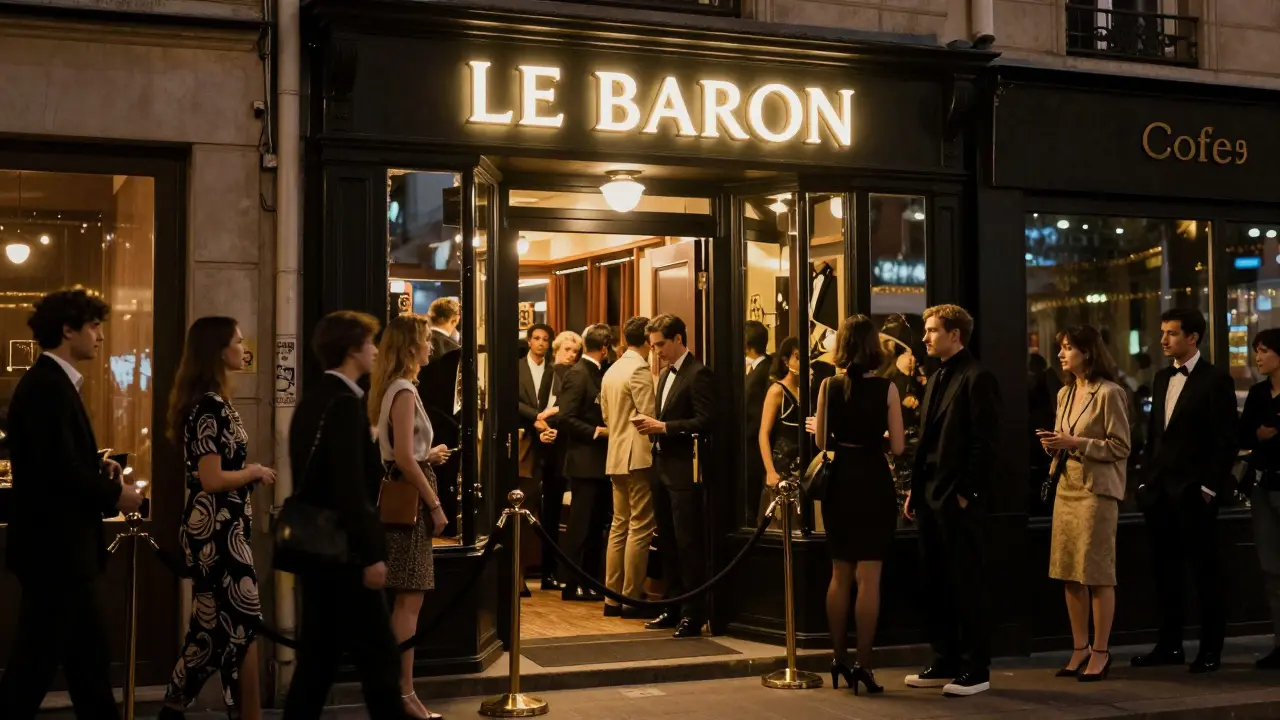
Le Baron
Open since 2003, Le Baron is a legendary nightclub located in the 8th arrondissement, known for its celebrity crowd and eclectic playlist. It doesn’t look like much from the outside-a small door tucked between a tailor and a coffee shop-but step inside and you’re in a world of velvet couches, mirrored walls, and DJs spinning everything from disco to techno. The dress code is strict: no sneakers, no hoodies. You’ll see models, musicians, and fashion editors mixing with tourists who got lucky. Lines form early, and entry isn’t guaranteed unless you’re on the list or have serious style. But if you want to feel like you’re in a movie scene from the 90s, this is the place.
Concrete
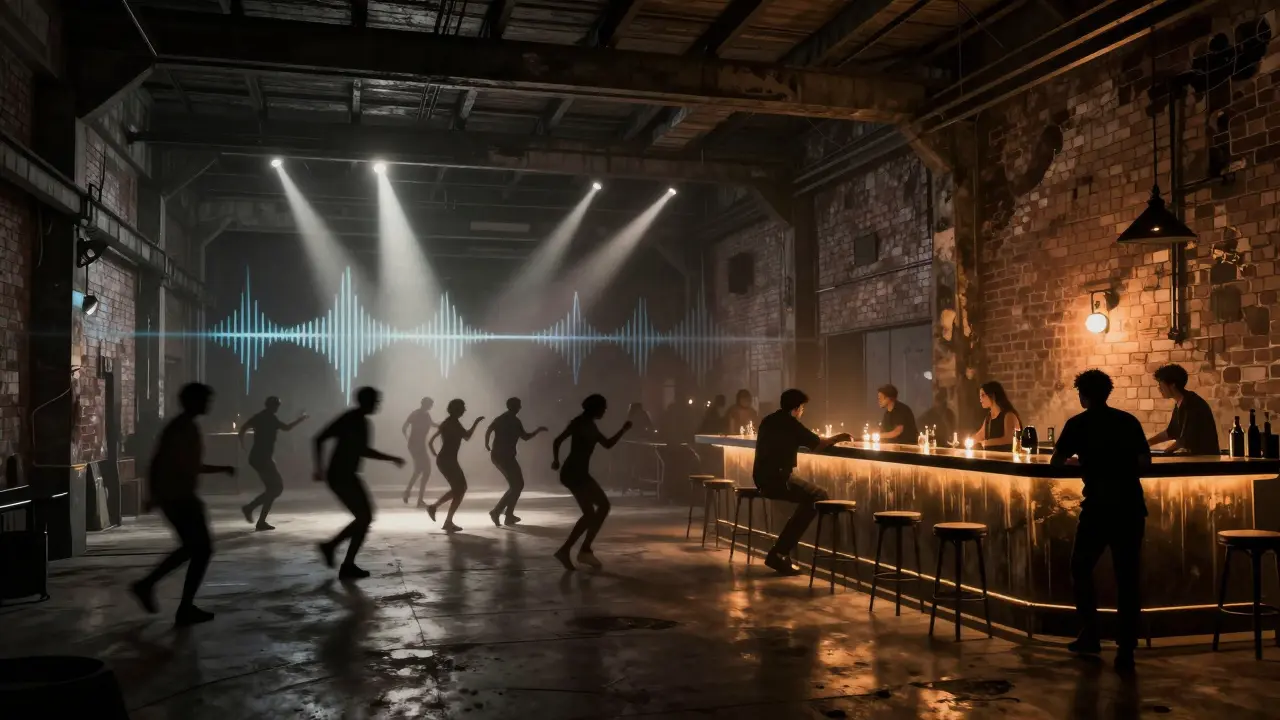
Concrete is a warehouse-style club in the 11th arrondissement, built inside a former industrial space, now one of Paris’s top destinations for underground techno and house. It opened in 2015 and quickly became a magnet for serious dancers and international DJs. The sound system is built for bass-deep, clear, and loud enough to rattle your ribs. The floor is concrete, the lights are dim, and the crowd? All about the music. No VIP tables, no bottle service. Just a long bar, a dance floor that never empties, and a vibe that says, "We’re here to move, not to be seen." It’s open until 6 a.m. on weekends, and the last hour is always the best. Bring cash-card machines don’t always work.
La Machine du Moulin Rouge
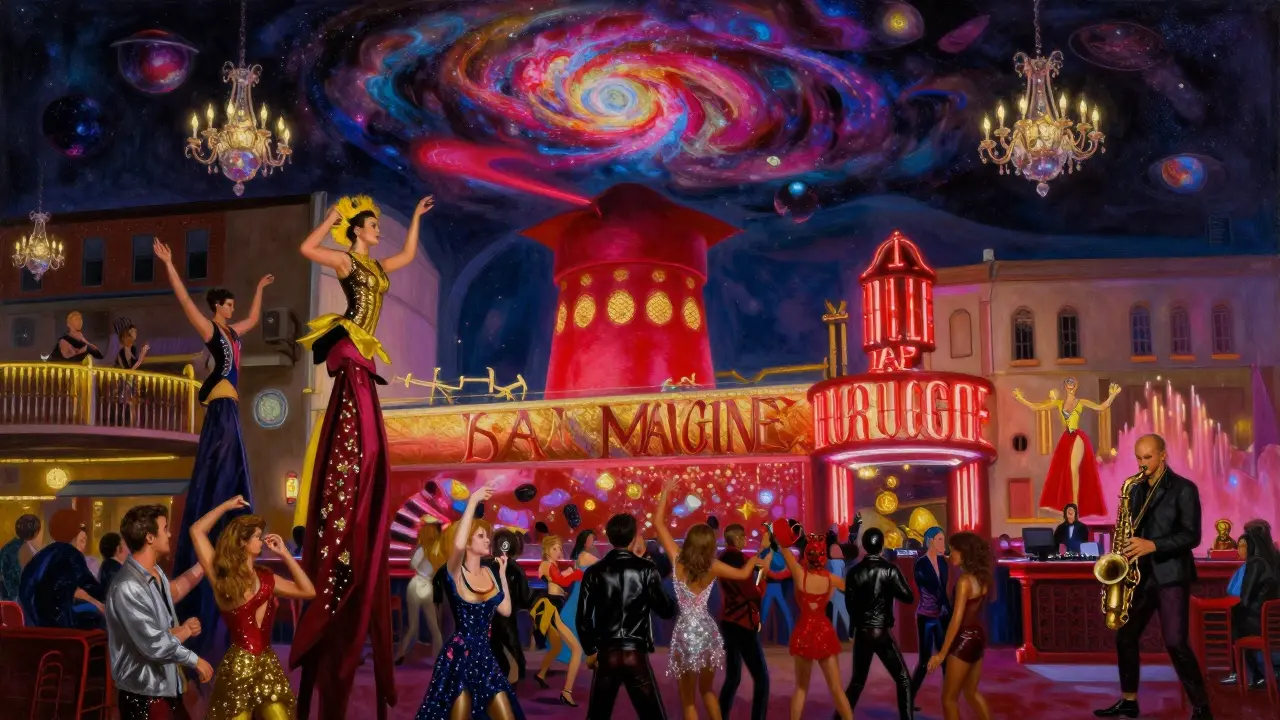
Forget the famous cabaret show. The real party happens next door at La Machine du Moulin Rouge is a massive, multi-level club that operates after the cabaret ends, blending burlesque, live performers, and electronic beats into a wild, theatrical experience. It’s not your typical club-it’s more like a circus meets rave. Think dancers on stilts, live saxophone solos over house tracks, and projections that turn the ceiling into a swirling galaxy. The crowd is mixed: tourists in glitter, locals in leather, and a few brave souls in full costumes. It’s expensive-cover starts at €35-but if you want spectacle, this is Paris’s most unforgettable night out.
Maya
Maya is a sleek, minimalist club in the 1st arrondissement that specializes in deep house and disco, with a crowd that values music over status. The walls are white, the lighting is soft, and the sound system is tuned by engineers who’ve worked with major festivals. You won’t find flashy logos or neon signs here. Instead, you’ll hear rare vinyl cuts from DJs who dig through crates in Berlin and Tokyo. The bar serves only whiskey, gin, and champagne-no soda, no mixers. The crowd is quiet, focused, and deeply into the groove. If you’ve ever wanted to dance like no one’s watching-even though everyone is-Maya is your sanctuary.
Gipsy
Gipsy is a high-energy, multi-room club in the 10th arrondissement that blends Latin rhythms, hip-hop, and French electro into a non-stop party. It’s the place where you’ll hear salsa mixed with Daft Punk, reggaeton under strobe lights, and a live percussionist on the second floor. The dance floors change vibe every hour: one room is all about bass-heavy trap, another is for salsa dancing, and the rooftop terrace has DJs spinning chill beats under the stars. It’s open until 4 a.m. daily, and the energy never drops. The dress code is loose-wear what’s comfortable. You’ll see students, expats, and locals all moving together. It’s loud, chaotic, and completely alive.
Le Klub
Le Klub is a retro-inspired club in the 12th arrondissement that recreates the vibe of 80s and 90s New York and London clubs, with vinyl-only sets and a strict no-phone policy. The walls are covered in vintage posters, the DJ booth is lit by old-school bulbs, and the music is all analog-no digital files allowed. The crowd here is older, mostly 30s to 50s, but they dance like they’re 20. You’ll hear Prince, New Order, and Frankie Knuckles on loop. No one takes photos. No one checks their phone. You’re here to feel the music, not post it. Entry is €15 after midnight, and the last song is always "I Feel Love" by Donna Summer.
What to Expect
Parisian clubs don’t open until midnight. Most don’t get busy until 1 a.m. and won’t thin out until 4 a.m. or later. Cover charges range from €10 to €40 depending on the venue and night. Cash is king-many clubs don’t accept cards after hours. Dress smartly: even casual spots expect you to look put-together. No flip-flops, no sportswear. And don’t expect English-speaking staff everywhere-learning a few French phrases helps. "Une bière, s’il vous plaît" goes a long way.
Pro Tips
- Check Le Soir or Paris Match for weekly club guides-they list upcoming DJs and themed nights.
- Use the metro. Taxis are expensive after midnight, and ride-share apps often charge surge pricing.
- Friday and Saturday nights are busiest. If you want a quieter vibe, go on a Wednesday or Thursday.
- Some clubs have gender-neutral entry policies. Others still require a balanced crowd-don’t show up with a group of 10 guys and expect easy entry.
- Don’t rush. The best nights in Paris start late and end late. The energy builds slowly. Be patient.
What’s New in 2026
This year, Le Baron added a second floor with a jazz lounge that opens at 11 p.m. Concrete launched a new residency with Berlin-based techno artist Lena Kretzschmar, playing every other Saturday. Gipsy now features a live Afrobeat band every Friday. These changes keep Paris’s scene fresh, but the core truth remains: the best clubs here aren’t about fame. They’re about the music, the movement, and the moment.
What’s the best night to go clubbing in Paris?
Friday and Saturday nights are the busiest and most energetic, with the biggest crowds and top DJs. But if you want a more relaxed vibe with easier entry, try Wednesday or Thursday. Many clubs host themed nights on weekdays-like vinyl-only sets or live jazz-that are just as good as weekend parties.
Do I need to make a reservation for Paris nightclubs?
Some clubs, like Le Baron and La Machine du Moulin Rouge, recommend or require reservations, especially on weekends. Others, like Concrete and Maya, operate on a first-come, first-served basis. It’s smart to check the club’s Instagram or website the day before. Many post their guest list policy or DJ lineup. If you’re staying in a hotel, ask the concierge-they often have direct contacts.
Are Paris nightclubs safe at night?
Yes, the major clubs are in well-patrolled areas, and security is tight. But like any big city, watch your belongings. Pickpockets sometimes target crowded dance floors. Keep your phone and wallet secure. Avoid walking alone after 3 a.m. in unfamiliar neighborhoods. Stick to well-lit streets and use the metro-it runs until around 1:30 a.m., and night buses are available after that.
Can I go to a Paris nightclub alone?
Absolutely. Many locals and expats go solo. Clubs like Maya and Le Klub are especially welcoming to solo dancers. You’ll find people chatting at the bar, dancing alone, or joining impromptu groups on the floor. Don’t worry about being alone-Parisians value personal space, and no one will judge you for dancing by yourself.
What’s the average age of clubgoers in Paris?
It varies by venue. Le Baron and La Machine draw a crowd in their 20s and 30s. Concrete and Maya attract mostly 25-40-year-olds who care more about music than trends. Le Klub and Gipsy have a wider range-20s to 50s. Paris clubs don’t have strict age limits, but most enforce a 18+ policy. You’ll rarely see people over 50 at the biggest clubs, but they’re definitely out there on quieter nights.